Practical IT Steps Every Business Should Take This Year
Updated: 4 days ago

Cyber risk isn’t just about hackers anymore. For many small and mid-sized businesses across Leicestershire, Derbyshire, and Nottinghamshire, risk comes from everyday issues. These include:
Old systems that haven’t been updated
Staff using weak passwords
Cloud tools being set up “quickly” but never reviewed
No clear plan if something goes wrong
We see this regularly when new businesses come to us. Nothing dramatic has happened yet, but the warning signs are there. The challenge is this: Most cyber incidents don’t start with a big attack. They begin with small gaps that build up over time.
Where Risk Really Comes From
In our experience supporting businesses in the East Midlands, the biggest areas of exposure tend to be:
Unpatched devices and servers
Staff accounts with too much access
Backups that exist but haven’t been tested
No clear responsibility for cyber security decisions
The UK Government’s Cyber Security Breaches Survey consistently shows that human error remains one of the leading causes of cyber incidents, not sophisticated hacking. This highlights an important truth: reducing risk isn’t about fear. It’s about control and visibility.
A Practical Starting Point
Reducing exposure doesn’t mean ripping everything out and starting again. It starts with asking simple questions:
Do we know what devices and systems we actually have?
Who has access to what, and why?
If we were hit tomorrow, could we recover quickly?
“Most businesses we work with don’t have a lack of technology. They have a lack of clarity around risk.” Allan Page, Managing Director, Somerbys IT
The Benefit of Getting This Right
When risk is reduced, several positive outcomes can occur:
Downtime drops
Insurance conversations become easier
Compliance becomes less stressful
Business owners sleep better
And crucially, IT stops feeling reactive. Instead, it becomes a proactive part of your business strategy.
Want to Know More?
This article only scratches the surface. If you want to explore further, I recommend downloading our in-depth guide: Reducing Cyber Risk & Exposure: A Practical Guide for East Midlands Businesses.
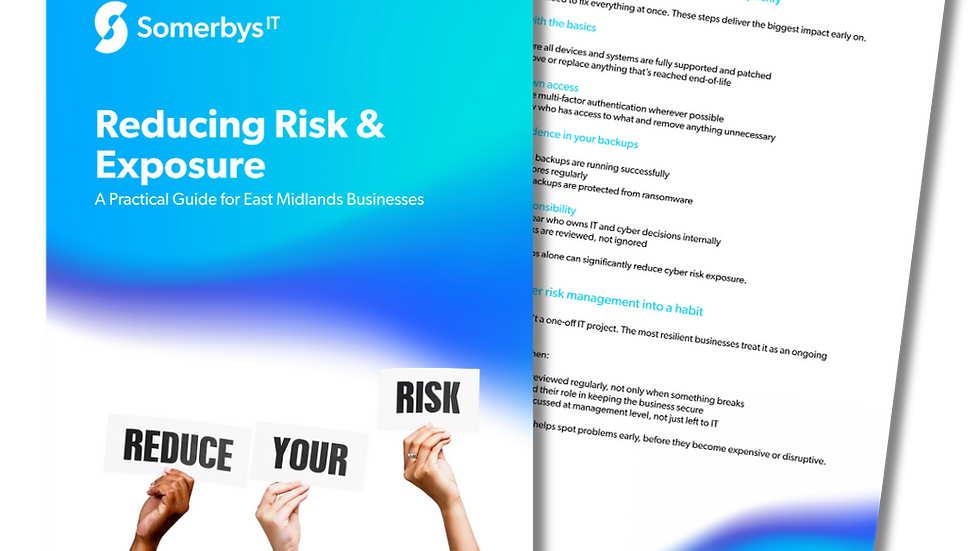
This guide walks you through:
Identifying your biggest risk areas
Prioritising what actually matters
Practical steps you can take without technical jargon
How to build a risk-aware culture without slowing the business down
Download the free guide and take control of your risk.
Understanding Cybersecurity Basics
To effectively manage cyber risks, it’s essential to understand the basics of cybersecurity. This includes knowing the types of threats that exist and how they can affect your business. Here are some common threats:
Phishing Attacks
Phishing attacks are deceptive attempts to obtain sensitive information. These often come in the form of emails that appear legitimate. Always verify the source before clicking on any links or providing information.
Malware
Malware is malicious software designed to harm your computer or network. It can steal data, encrypt files, or disrupt operations. Regular updates and antivirus software can help protect against these threats.
Ransomware
Ransomware is a type of malware that locks you out of your files until a ransom is paid. Regular backups can mitigate the impact of such attacks. Ensure that your backups are stored securely and tested regularly.
Building a Cybersecurity Culture
Creating a culture of cybersecurity within your business is crucial. Here are some steps to foster this environment:
Training and Awareness
Regular training sessions can help employees understand the importance of cybersecurity. Make sure they are aware of the latest threats and how to respond to them.
Clear Policies
Establish clear cybersecurity policies that outline acceptable use of technology and data handling procedures. Ensure that all employees understand these policies and their importance.
Encourage Reporting
Create an environment where employees feel comfortable reporting suspicious activities. This can help catch potential threats before they escalate.
Conclusion
Managing cyber risk is essential for businesses of all sizes. By taking practical steps and fostering a culture of cybersecurity, you can protect your business from potential threats. Remember, it’s not just about having the right technology; it’s about understanding and managing the risks associated with it.
Take the first step today by downloading our guide and empowering your business to work more effectively and securely.